

Innovative swallowing diagnostic service now available for Midwest residents
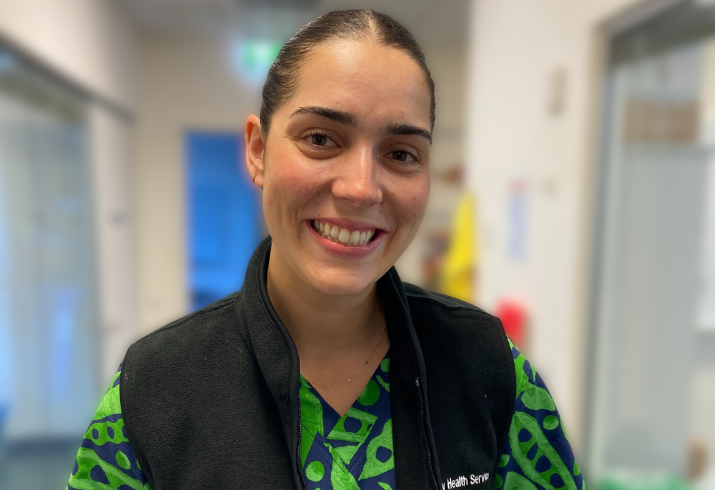 WA Country Health Service Midwest Speech Pathologist Sophie Maines
Midwest residents living with dysphagia (swallowing difficulties) can now access advanced diagnostic assessments thanks to an innovative partnership made possible through virtual care technology.
With between 15 and 30 per cent of Australians aged 65 and over experiencing swallowing difficulties, this new service represents a significant step forward for the Midwest community.
The initiative is a collaboration between WA Country Health Service (WACHS) Speech Pathology and Medical Imaging departments at Geraldton Health Campus, and specialist Speech Pathologists from North Metropolitan Health Service (NMHS) based at Osborne Park Hospital.
Videoflouroscopic Swallow Studies (VFSS) are a dynamic X-ray that captures how food and fluids move from the mouth through the throat and into the oesophagus. It allows specialist speech pathologists and radiologists to make precise diagnoses of swallowing disorders, a condition affecting up to one million Australians.
WACHS Midwest Speech Pathologist Sophie Maines said the virtual model allows local clinicians to connect via livestream with metropolitan specialist speech pathologists in real time, enabling on-the-spot decisions during the examination.
“We’re able to view the oral and pharyngeal phases of swallowing, which helps us identify problems like aspiration (food or fluid entering the lungs) — or choking risks,” Sophie said.
“From there, we can recommend safe compensatory strategies, texture-modified diets, and rehabilitation exercises to strengthen the swallow and improve safety.”
Osborne Park Senior Speech Pathologist Louise Cleary said through collaboration, the initiative had demonstrated the feasibility of the virtual VFSS model known as TeleVFSS.
“Importantly, the model not only improves equity of access but also supports regional clinicians to provide evidence-based care, embedding specialist expertise into local services,” Louise said.
“By uniting regional and metropolitan teams, TeleVFSS demonstrates how collaboration, technology, and translational research can build sustainable models of care that deliver high-quality, equitable health outcomes across WA.”
WACHS Chief Medical Imaging Technologist Ros Barnes, based at Geraldton Health Campus, said the project had fostered excellent interdepartmental collaboration and knowledge sharing.
“Delivering real-time, high-quality imaging over hundreds of kilometres was a technical challenge — but one that was overcome by the outstanding teams in both Geraldton and Osborne Park Hospital,” Ros said.
“The technology means patients can now undergo comprehensive swallowing assessments closer to home, without the added expense, time, and stress of travel.
"It’s a big win for our community.”
Sophie shared a recent success story of a patient who, following a stroke, was unable to safely swallow.
“She had severe dysphagia and we were concerned she was aspirating many foods and fluids. Her biggest goal was simply to eat a normal diet,” Sophie said.
“The VFSS revealed she could safely swallow thickened fluids and a modified diet. She’s now able to eat and drink again — and is so much happier as a result.”
“Eating and drinking are such essential parts of quality of life — it’s something most people don’t think about until it’s taken away.”