

Acknowledging National Reconciliation Week at Bennett Street
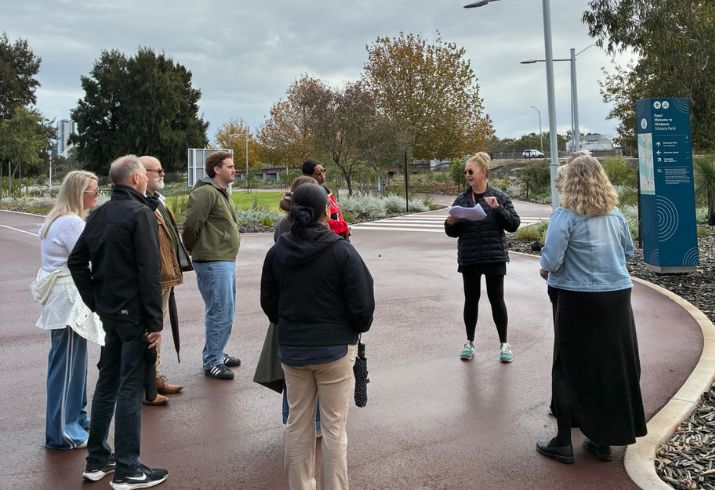
National Reconciliation Week provides an important opportunity for our staff to stand up and show their support and intention in working towards true reconciliation for Aboriginal people.
Our Mental Health Central Office team at Bennett Street did just that, with a week of culturally focussed activities.
Highlights included a Reconciliation Walk and visit to the to the Elizabeth Hansen Autumn Centre (EHAC).
Reconciliation Walk
Staff made their way towards Boorloo Bridge, passing the Derbarl Gordo Boodjar (River Island of Birth) and Ni Wongi (Listen Talk) sculptures and pausing at the Wanna/Booka (Digging Stick and Cloak) sculpture to reflect.
They also took the time to take in Matagarup (Heirisson Island), a historically important site where Aboriginal Australian activists – to this day – host peaceful protests for cultural rights and social solidarity.
To learn more about the Derbarl Gordo Boodjar, Ni Wongi and Wanna/Booka sculptures and artists click here.
Elizabeth Hansen Autumn Centre
EHAC provides culturally secure short-term accommodation and care for Aboriginal patients and their carers who travel from regional and remote communities.
Manager Sharmain Sands kindly showed staff around the facility and gave great insight into how the centre supports regional patients to get to their appointments and provides home-style meals with the team often staying open late to accommodate those arriving from the regions.
A small, but mighty team, their work is vital in providing culturally responsive support for Aboriginal people during what can be a challenging time.
Program Director Mental Health and Aboriginal Health Strategy Karen Kyriakou said that acknowledging Reconciliation and participating in cultural activities is important in many ways.
“By taking part, non-Aboriginal staff demonstrate to Aboriginal colleagues they work alongside that they are in a culturally respectful working environment,” Karen said.
“We learn so much from our Aboriginal colleagues to continue to grow and learn, this year’s theme of ‘All In’ was a powerful and important message.
“This also transfers to Aboriginal people who access our services as it demonstrates our commitment to providing welcoming environments which are culturally safe and responsive, which is paramount for patient-centred care.
“In addition to this, the underlying benefit – which is not always apparent – is the learning non-Aboriginal staff gain, which ultimately helps to reduce the often-unseen burden of cultural load which is placed on Aboriginal staff.
“Thank you to the team and every team who got involved for National Reconciliation Week.”